
Supporting SNAP & Low-Income Household
Government Shutdown Support Hub
LIVE Webinar
From Loan to Loyalty: Data-Driven Strategies for Engaging Every Member
Tools & Resources
What's happening
As the federal government shutdown continues, low-income households who rely on the Supplemental Nutrition Assistance Program (SNAP) face mounting uncertainty.
Federal contingency funds are running out, and benefits may be delayed or halted starting in November, leaving millions of families without their primary source of food assistance.
For utilities, this presents an urgent challenge: households already struggling to afford basic needs may now have to choose between paying for food or utilities. The result could be higher arrearages, increased service disconnections, and more pressure on community support systems.
BlastPoint has compiled data, maps, and communication tools to help utilities anticipate where risk is highest and take action early to support vulnerable customers.
Data Highlights
-
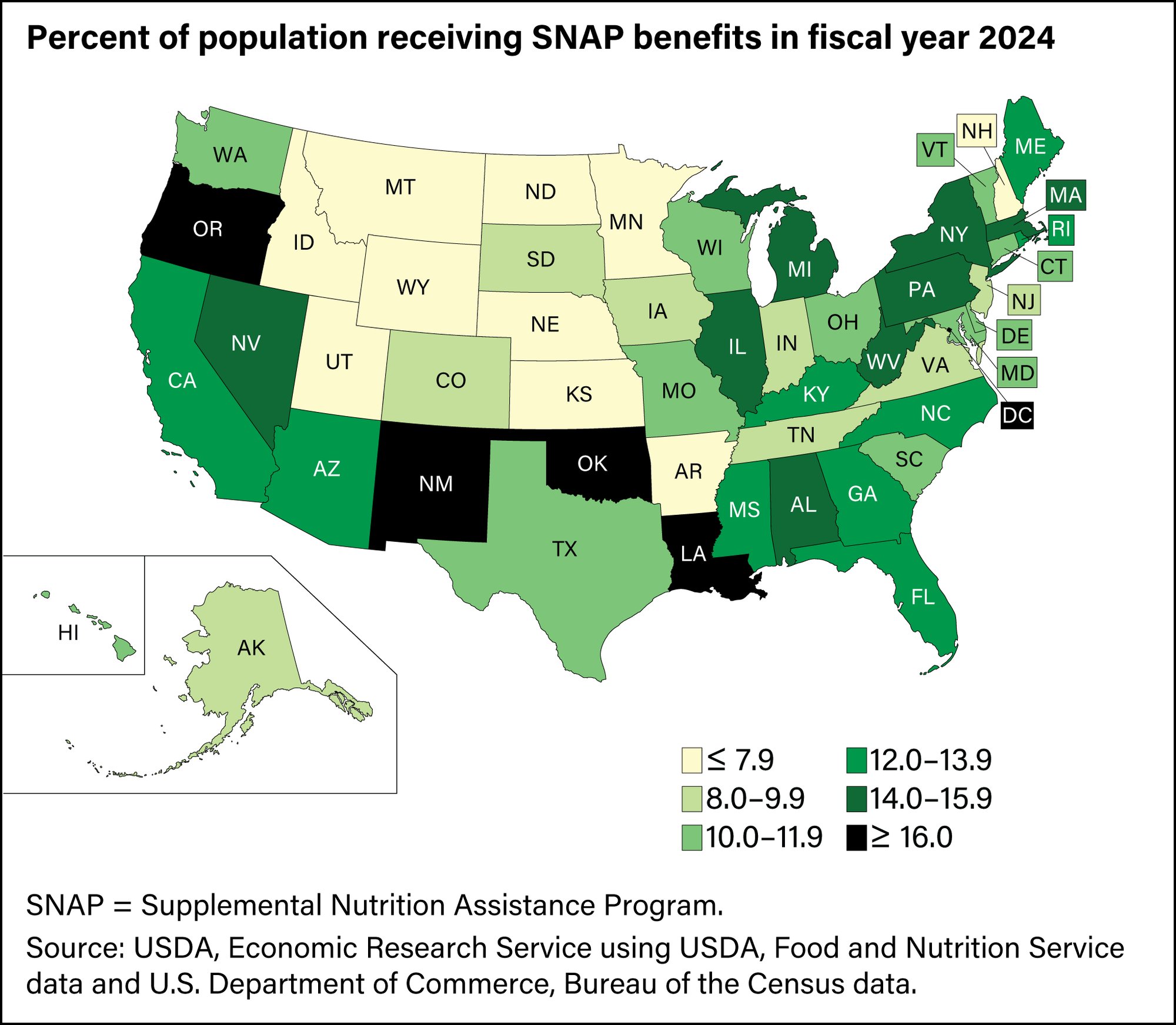
Nationwide reliance: Roughly 12.3% of Americans, about 42 million people each month, received SNAP benefits in fiscal year 2024, highlighting the widespread need for food assistance across the U.S.
-
Highest dependency regions: New Mexico (21.2%) and Washington, D.C. (19.6%) have the largest share of residents relying on SNAP, underscoring the scale of potential disruption in these areas.
-
Lowest participation: Utah (4.8%) and Wyoming (4.9%) show the smallest shares of residents on SNAP, though rural and tribal communities in those states may still face high vulnerability due to food access challenges.
-
State-led stopgaps emerging: Several states, including Connecticut, Guam, Louisiana, Virginia, and Vermont, are using local or emergency funds to temporarily cover SNAP benefits for early November, partially cushioning residents from immediate hardship.
-
Relief and contingency efforts: South Carolina, Hawaii, and Massachusetts have activated relief or contingency funding to sustain food assistance, while Minnesota is channeling funds directly to regional food bank systems to address expected shortfalls.
-
Administrative bottlenecks ahead: Because the federal government typically processes SNAP distributions, state-level efforts may face technical delays or regional disparities, leaving some households without benefits for several weeks.
-
Energy-food tradeoff risk: Households losing SNAP benefits are likely to reprioritize limited cash toward groceries, increasing the likelihood of missed or delayed utility payments, especially in states with high energy burdens.
-
Utility action opportunity: Utilities serving states with above-average SNAP enrollment (≥ 15%), such as Mississippi, New Mexico, West Virginia, and Louisiana, should consider targeted outreach and flexible billing options for at-risk households.
List of Financial Institutions offering temporary relief
Financial Relief Programs for Households Impacted by SNAP Benefit Disruptions
Here are a few financial institutions and programs that low-income households, including those potentially losing Supplemental Nutrition Assistance Program (SNAP) benefits, may be able to access for emergency loan or hardship support.
| Source | Program | Who Qualifies | Link |
| Mission Asset Fund (MAF) | Zero-interest lending & credit-building programs | Low-income families who meet program criteria in participating states | Link |
| National Credit Union Administration (NCUA) – ACCESS Initiative | Grants and loans for low-income designated credit unions to serve their members (e.g., PALs) | Members of low-income credit unions, under hardship | Link |
National Database of Food Assistance Programs
Food Assistance Resources
To help utilities connect customers with additional food security support, we’ve included a list of trusted, national databases that provide state-by-state directories of food assistance programs.
These resources can be shared directly with customers or used by utility outreach teams to identify local partners.
| Source | Overview | Link |
| WhyHunger — Find Food Database | WhyHunger’s Find Food tool is a nationwide database of food pantries, community meal sites, and hunger-relief organizations. Users can search by ZIP code or state to find nearby assistance options. | Link |
| Feeding America — Find Your Local Food Bank | Feeding America is the largest hunger-relief network in the U.S., operating more than 200 food banks and 60,000 partner agencies. The search tool allows users to locate the closest food bank by ZIP code or state. | Link |
| USDA — Food and Nutrition Service (FNS) Program Data | The USDA’s Food and Nutrition Service offers comprehensive data and dashboards covering SNAP participation, WIC, school meals, and other nutrition programs. The FNS Program Participation dashboard includes state-level and county-level views of food assistance enrollment and program access. | Link |
Tip for Utilities
These resources are publicly available and widely trusted, making them ideal for inclusion in customer outreach materials, bill inserts, or local assistance referral lists.
Combining food assistance data with BlastPoint’s customer insights can help utilities reach the right households at the right time, reduce arrearages, and strengthen community trust.
Financial Pressure & Dual Burden Insights
-
42 million Americans rely on SNAP each month for food assistance.
-
The USDA reports that available funds (~$6 billion) are insufficient to cover November’s ~$8 billion in benefits, creating a potential nationwide shortfall.
-
In some states (e.g., North Carolina), over 1.4 million residents rely on SNAP, and state agencies are already warning of possible delays.
-
Low-income households spend about 18% of their income on utilities, nearly triple the national average, amplifying risk of late or missed payments.
-
SNAP households often cover 60–80% of grocery costs with their benefits, leaving little room to absorb other expenses.
What This Means for Utilities
-
Arrearage risk rises sharply when households lose SNAP support—many immediately reallocate funds to food.
-
Coordinated messaging between utilities, local food banks, and credit unions helps customers navigate overlapping hardships.
-
Data-driven targeting (using SNAP density by ZIP) allows utilities to reach customers before disconnection notices occur.
-
Proactive outreach strengthens community trust and reduces operational strain during crises.
.png "Snap Support")
Be the connection that keeps communities strong.
We’re here to help utilities act early, communicate clearly, and provide real support to customers impacted by the shutdown.
Get in touch with us to collaborate on proactive, compassionate outreach.