
Supporting Military & Federal Workers
Government Shutdown Support Hub
LIVE Webinar
From Loan to Loyalty: Data-Driven Strategies for Engaging Every Member
Tools & Resources
What's happening
As the government shutdown continues into late October, military service members and federal employees will begin missing paychecks starting November 1.
These workers represent a significant share of customers in many utility service areas, particularly near bases, ports, and federal facilities.
Without proactive support, affected customers may face sudden financial hardship, leading to:
-
Missed or delayed utility payments
-
Higher arrearage balances
-
Increased call center demand
-
Greater strain on community assistance networks
BlastPoint has compiled actionable data, financial relief programs, and communication resources to help utilities support these households before the crisis deepens.
.png "Military")
Understand the Impact in Your Territory
Where Military & Federal Workers Live
See where shutdown-affected customers live and work in your territory.
Use the map below to spot high-density zones of federal civilian workers and active-duty military households. These areas are most likely to feel income disruption first.
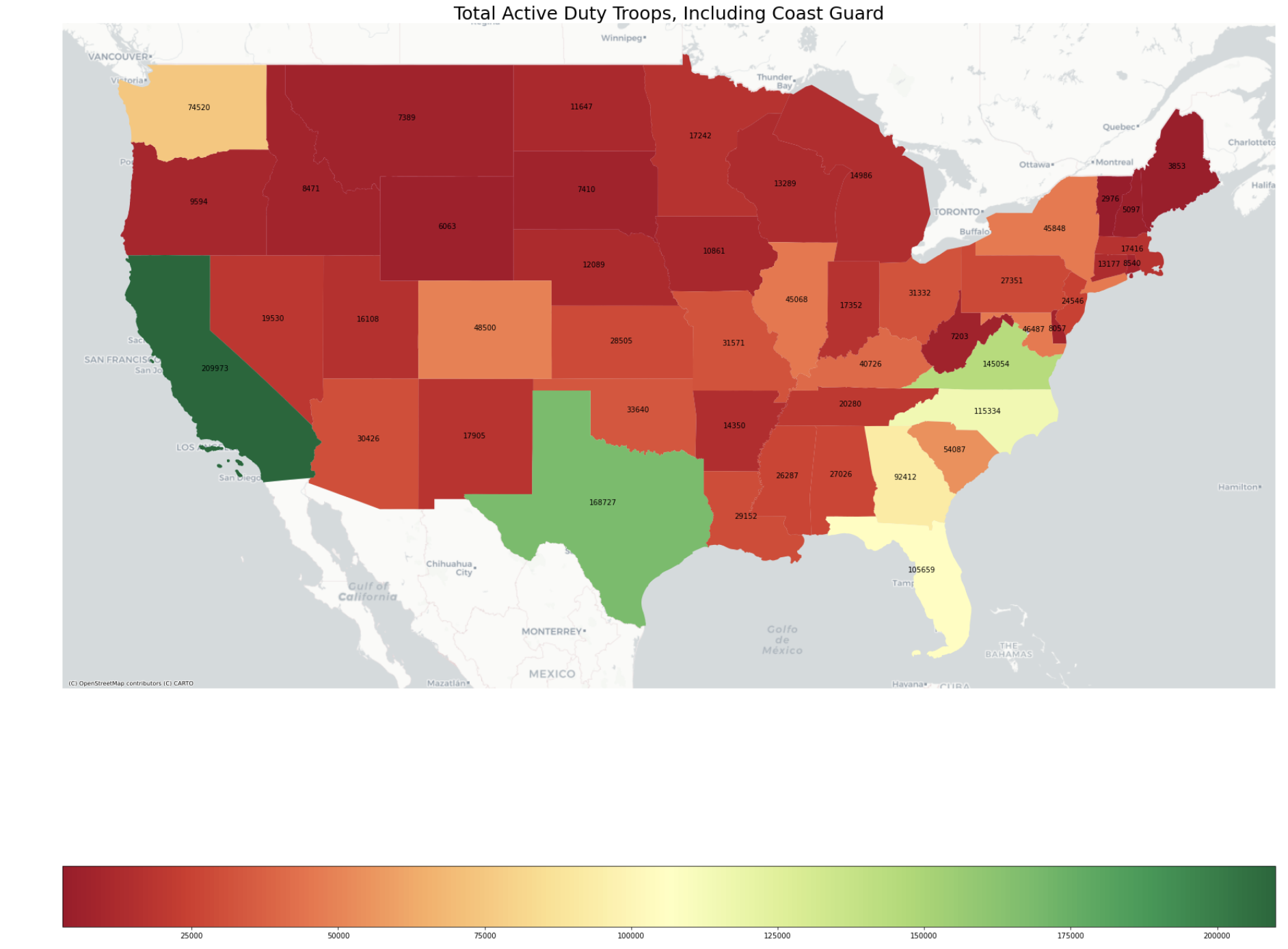
Where Active Duty Troops Live
See the distribution of active-duty troops across all branches, including the Coast Guard. This data reflects how military households are geographically concentrated, helping utilities anticipate potential impacts from the government shutdown.
Data Highlights
-
-
The U.S. has ~1.3 million active-duty service members, concentrated in a handful of key states.
-
Southeastern and coastal states have the highest military presence, reflecting proximity to major bases, ports, and training centers.
-
Military presence is regionally concentrated: Five states — California, Virginia, Texas, North Carolina, and Florida — account for nearly half of all active-duty troops, creating concentrated pockets of payment risk during the shutdown.
-
Local economies depend heavily on bases: In many Southern and coastal regions, military installations support 10–15% of local employment, amplifying potential utility bill impacts if paychecks are delayed.
-
Army and Air Force bases drive the largest energy loads: These branches’ extensive housing and infrastructure produce higher and more variable utility demand, making proactive planning critical during financial disruptions.
-
Military and federal worker clusters often overlap: States like Virginia, Maryland, and Texas house both large defense installations and major federal workforces, compounding local financial stress during shutdowns.
-
Utilities can use geographic data to act early: Mapping active-duty concentrations by ZIP code helps utilities target outreach, offer flexible billing, and prevent arrears before crises escalate.
-
Collaboration reduces community strain: Partnering with local credit unions and community aid programs offering 0% loans or hardship relief helps utilities support affected households while maintaining operational stability.
-
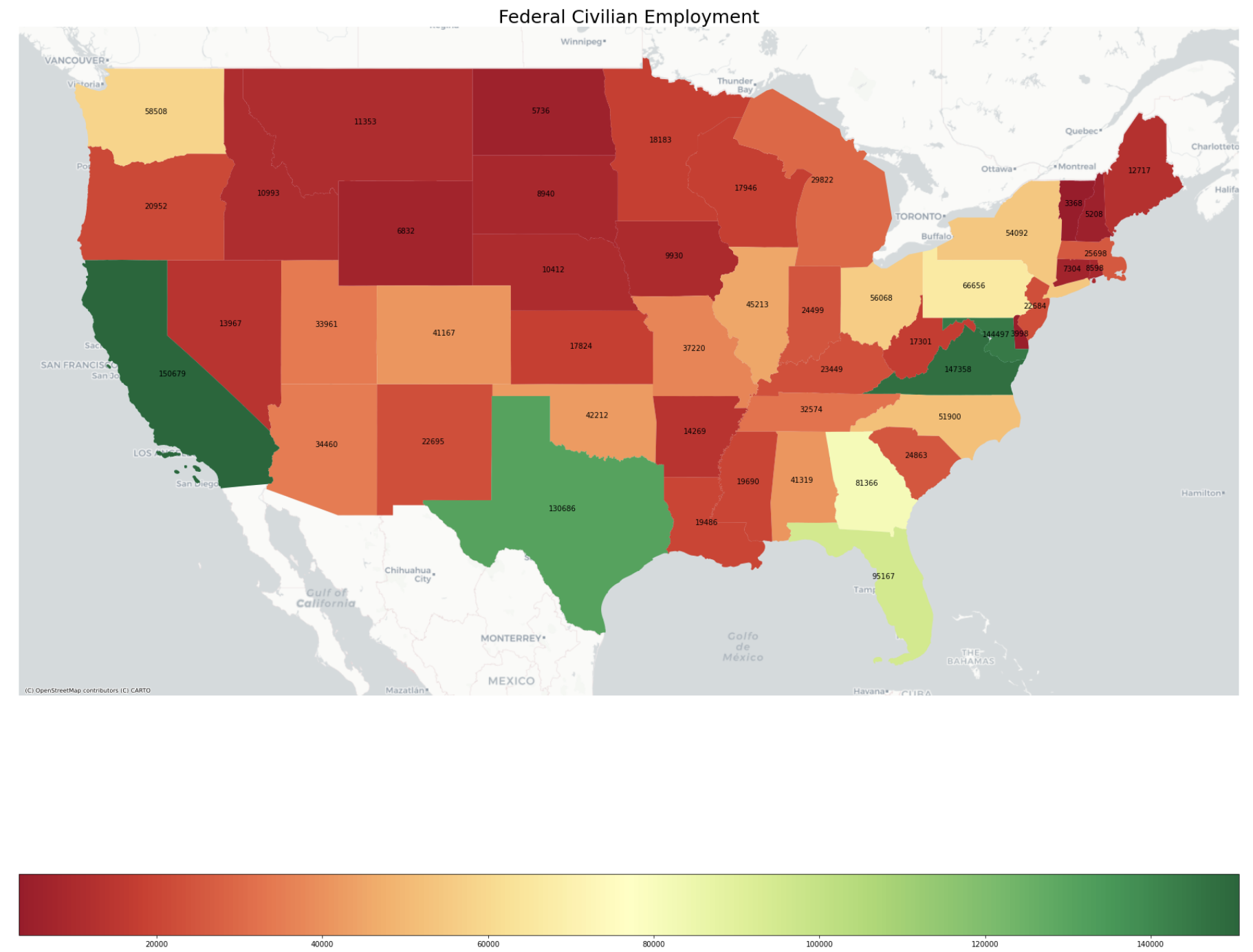
Where Federal Workers Live
Federal civilian workers make up more than two million employees nationwide, with high concentrations in states like Virginia, Maryland, California, and Texas. Use this map to identify regions where household income disruptions may affect payment stability.
Data Highlights
-
The federal government employs over 2 million civilian workers across all states and territories. EveryCRSReport
-
States with the highest numbers:
-
California ~150,679 federal civilian workers (Sep 2024) congress.gov
-
Virginia ~147,358 workers (Sep 2024) congress.gov
-
Maryland ~144,497 workers (Sep 2024) congress.gov
-
Texas ~130,686 workers (Sep 2024) congress.gov
-
-
In many congressional districts, federal workers comprise 5% or more of the employed civilian workforce, indicating dense local exposure. EveryCRSReport
-
Utilities serving areas with large federal workforces (e.g., the DC/VA/MD region, large urban centers) face elevated risk of payment disruptions if those workers lose income or face furloughs.
-
The data reflect duty-station location, not necessarily residence—so utilities should cross-reference with residential ZIPs to identify where affected households live. congress.gov
-
Because federal employees often live in clusters near major facilities or agencies, utilities can prioritize outreach and support efforts in those ZIPs to mitigate arrearage risk.
-
When combined with military active-duty concentrations, regions with high federal civilian presence represent double exposure (military + federal) to financial stress during a government shutdown or pay disruption.
-
For utilities, this means designing targeted communications and payment flexibility programs aimed at both service-members’ households and federal civilian households in overlapping geographies.
List of Financial Institutions offering temporary relief
0% Interest & Emergency Loan Programs
Many banks, credit unions, and nonprofits have activated temporary financial relief programs to help furloughed and unpaid workers manage essential expenses, including utility bills.
| Institution | Program | Who Qualifies | Learn More |
| Army Emergency Relief (AER) | 0% no-interest loans and grants for furloughed Army personnel | Active-duty, Guard, Reserve, and civilian Army employees | Link |
| Air Force Aid Society (AFAS) | No-interest loans and emergency grants | Active-duty, Guard, and Reserve Air Force personnel | Link |
| Coast Guard Mutual Assistance | Interest-free loans (including during government shutdowns) covering housing, utilities, food etc. | Active-duty Coast Guard, reservists, civilian employees of Coast Guard community | Link |
| FEEA (Federal Employee Education & Assistance Fund) | “Emergency Hardship Loans” – no-interest loans for federal employees facing sudden financial gaps. | Federal civilian employees in hardship situations | Link |
| Harborstone Credit Union | 0.00% APR Furlough Loan | Federal government employees (must have been employed ≥ 6 months and be furloughed) | Link |
| Navy Federal Credit Union | Government Shutdown Relief Loan Program (0% APR) | Military members, veterans, and federal employees | Link |
| PenFed Credit Union | Emergency 0% loans and deferred payments | Federal employees and contractors | Link |
| State & Local Programs | Maryland Public Servant Support Resources | Federal and military workers based in Maryland | Link |
| United Service Organizations (USO) – Financial Institutions Listing | Military Member Emergency Assistance (through partner credit unions) | Military members and families eligible for zero-interest or relief programs via partner banks/credit unions | Link |
Utility Tip: Share this table in your customer portals, newsletters, or call center scripts — it builds trust and positions your organization as a proactive partner during uncertainty.
Key Stats & Insights
Why this matters right now
-
Who’s missing pay: BPC estimates ~700k+ furloughed civilians and ~690k “excepted” civilians working without pay; active-duty also at risk if stop-gap funds lapse. Bipartisan Policy Center
-
Pay timing risk: Military pay was covered for Oct 15 via a one-time $8B DoD reallocation; future pay dates depend on continued funding during the shutdown. Reuters
-
Scale & dispersion: ~2.3M federal civilians overall, ~80% outside the DC area, so impacts extend far beyond the Beltway. The Wall Street Journal
-
Total exposure footprint: Combining federal civilians and active-duty personnel, over 3.5 million U.S. households may face income disruption — many concentrated in utility service territories across the South, Mid-Atlantic, and coastal states.
-
Regional impact: Virginia, Maryland, Texas, California, and Florida together employ more than 600,000 federal civilians, creating overlapping risk zones where military and federal worker households cluster.
-
Economic multiplier effect: Every 1 federal job supports roughly 1.8 private-sector jobs in local economies, meaning reduced pay can ripple through small businesses and increase residential arrears.
What This Means for Utilities
-
Focus outreach in areas with overlapping military bases and federal employment clusters.
-
Prepare hardship options and partner messaging with local credit unions offering 0% loans.
-
Use data segmentation to identify affected customers early and prevent arrears before the crisis deepens.
.png "Support military & federal worker chicken")
Be the connection that keeps communities strong.
We’re here to help utilities act early, communicate clearly, and provide real support to customers impacted by the shutdown.
Get in touch with us to collaborate on proactive, compassionate outreach.